Archimedes of Syracuse (287 - 212 BCE), the most famous and probably the best mathematician of antiquity, made so many discoveries in mathematics and physics. He was Greek engineer who made the first measurement of specific gravity.
He was born in Syracuse, the principal city-state of Sicily, the son of the astronomer Phidias. He spent considerable time in Alexandria, where he studied with Euclid’s successors.
He returned to Syracuse where he spent most of the rest of the life. He made many mathematical discoveries, including the most accurate calculation of pi made up to that time.
In engineering he was the founder of the science of hydrostatics. He is well known for the discovery of ‘Archimedes Law’ that a body wholly or partly immersed in a fluid loses weight equal to the weight of the fluid displaced. He thus made the first measurement of specific gravity.
Archimedes also proved the law of the lever and developed the theory of mechanical advantage boasting to his cousin Hieron, ‘Give me a place to stand on and with a lever I will move the whole world.’
To prove his point, he launched one of the biggest ships built up to that date. During his time in Egypt, he devised the ‘Archimedean Screw’. The Archimedes screw is still in use today for pumping liquids and granulated solids such as coal and grain. The Archimedes screw described in Roman times by Vitruvius may have been an improvement on a screw pump that was used to irrigate the Hanging Gardens of Babylon.
He also built an astronomical instrument to demonstrate the movements of the heavenly bodies, a form of orrery.
He was General of Ordnance to Heiron and when the Romans besieged Syracuse. Archimedes was killed by a Roman soldier despite orders that he should not be harmed.
During the siege of Syracuse in the Second Punic War, inventions by Archimedes such as a catapult equally serviceable at a variety of ranges, caused great fear to the Roman attackers.
He also experimented with burning glasses and mirrors or setting for to wooden ships.
Archimedes of Syracuse
History is about people in society, their actions and interactions, the beliefs and prejudices their pasts and presents. History is the science which investigates and then records past human activities as are definite in time and space, social in nature and socially significant. The word ‘History’ means learned, expert, and knowledgeable. The word history has the connotation of finding out by investigation or inquiry.
Showing posts with label scientist. Show all posts
Sunday, November 7, 2021
Sunday, April 22, 2018
Biography of molecular biologist: Sidney Altman
Sidney Altman received his Nobel Prize for Chemistry in 1989 for “his discovery that RNA in living cells is not only a molecule of hereditary, but also can function as a bio catalyst.”
As the Royal Swedish of Sciences said in the press release announcing Altman’s Nobel Price; “This discovery which came as a complete surprise to scientists, concerns a fundamentals aspect of the molecular basis of life. Many chapters in our textbooks will have to be revised.”
Sidney Altman was born in the Montreal suburb of Notre Dame-de-Grace of Polish-Russian immigrant parents in 1939. While he was still in high school, Sid and a friend decided on a whim to write the American Scholastic Aptitude Test (SAT) at McGill.
Both friends applied to the Massachusetts Institute of Technology (MIT) in Boston, and as luck would have it, Sid was accepted, but his friend was not.
He earned his B.Sc. in 1960. He then spends eighteen months in graduate school at Columbia University in New York. He decided to enroll as a graduate student in biophysics at the University of Colorado, where he obtained his PhD. in molecular biology.
After a year of research at Harvard, Altman had the great privilege of joining Cambridge. Altman made his initial discovery that eventually led to his Nobel Price. At the end of his term in Cambridge, he was offered the post of assistant professor at Yale University in New Haven, Connecticut which he accepted. At Yale he progressed to full professor on 1980. At Yale, he continues to work on aspects of the same RNA molecular for which he won the Nobel Price.
Biography of molecular biologist: Sidney Altman
As the Royal Swedish of Sciences said in the press release announcing Altman’s Nobel Price; “This discovery which came as a complete surprise to scientists, concerns a fundamentals aspect of the molecular basis of life. Many chapters in our textbooks will have to be revised.”
Sidney Altman was born in the Montreal suburb of Notre Dame-de-Grace of Polish-Russian immigrant parents in 1939. While he was still in high school, Sid and a friend decided on a whim to write the American Scholastic Aptitude Test (SAT) at McGill.
Both friends applied to the Massachusetts Institute of Technology (MIT) in Boston, and as luck would have it, Sid was accepted, but his friend was not.
He earned his B.Sc. in 1960. He then spends eighteen months in graduate school at Columbia University in New York. He decided to enroll as a graduate student in biophysics at the University of Colorado, where he obtained his PhD. in molecular biology.
After a year of research at Harvard, Altman had the great privilege of joining Cambridge. Altman made his initial discovery that eventually led to his Nobel Price. At the end of his term in Cambridge, he was offered the post of assistant professor at Yale University in New Haven, Connecticut which he accepted. At Yale he progressed to full professor on 1980. At Yale, he continues to work on aspects of the same RNA molecular for which he won the Nobel Price.
Biography of molecular biologist: Sidney Altman
Saturday, October 22, 2016
Biography of Sir Ronald Aylmer Fisher
Sir Ronald Aylmer Fisher (1890 – 1962), British statistician and geneticist who pioneered the application of statistical procedure to the design of scientific experiments. He received a knighthood in 1952.
Twin sons were born in February 17, 1890, London, England, to Fisher’s father, a British auctioneer. One of them soon died, and Ronald was survivor.
Studied at Gonville and Caius College Cambridge, Fisher graduated in mathematics in 1913 and spent two years as a statistician with an investment company. Fisher’s interests were broad, including astronomy, mathematics, physics and biology.
In 1918 Fisher published the results of his statistical analysis of characters that show continuous variation, such as human stature. Fisher argued that the effects of dominance and gene interaction would confuse the actual genetic similarity between relatives,
Too short sighted for military services, he taught at Rugby School for the duration of World War 1.
Fisher started his mathematical career when he joined Rothamsted Experimental Station in 1919, with the task of sorting and analyzing numerous field data.
By his treatment (partition) of the statistical variance, he was able to distinguish between variation due to environmental factors and that due to genetic factors; the latter were confirmed as being largely determined by the cumulative effects of many separate genes, each inherited according to Mendelian principle.
Fisher subsequently did much to improve experimental methodology by introducing the concepts of random sampling and the technique of analysis of variance, which qualifies sources of variations in an experiment. In the paper ‘On the Mathematical Foundation of Theoretical Statistics’ (1922) he developed a sensible theory of estimation.
His books notably Statistical Methods for Research Workers (1925), The Design of Experiment (1935), and Statistical Tables (1938), form the foundation of statistical analysis in modern biological experimentation.
Fisher’s mathematical study of genes and their mutations populations demonstrated how Mendelian genetics is consistent with the Darwinian view of evolution by natural selection, making The Genetical Theory of Natural Selection (1930) one of the seminal works of neo-Darwinism.
Fisher became a fellow of the Royal Society in 1929. In 1933 he was appointed Galton Professor of Eugenics at University College, London, and thereafter professor of genetics at Cambridge University (1943 – 57) until his retirement.
From 1960 he spent the remainder of his life working for the Commonwealth Scientific and Industrial Research Organization (CSIRO) in Adelaide, Australia.
Biography of Sir Ronald Aylmer Fisher
Twin sons were born in February 17, 1890, London, England, to Fisher’s father, a British auctioneer. One of them soon died, and Ronald was survivor.
Studied at Gonville and Caius College Cambridge, Fisher graduated in mathematics in 1913 and spent two years as a statistician with an investment company. Fisher’s interests were broad, including astronomy, mathematics, physics and biology.
In 1918 Fisher published the results of his statistical analysis of characters that show continuous variation, such as human stature. Fisher argued that the effects of dominance and gene interaction would confuse the actual genetic similarity between relatives,
Too short sighted for military services, he taught at Rugby School for the duration of World War 1.
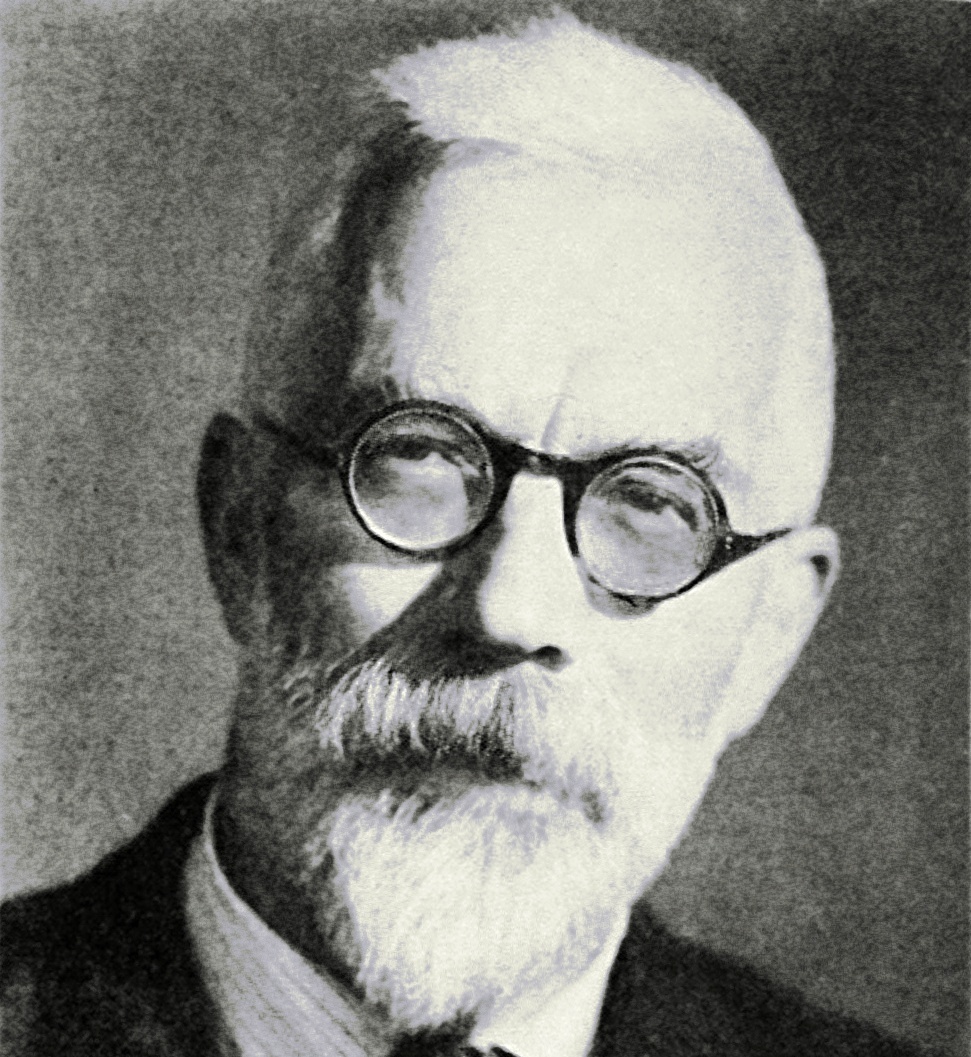
| Sir Ronald Aylmer Fisher |
By his treatment (partition) of the statistical variance, he was able to distinguish between variation due to environmental factors and that due to genetic factors; the latter were confirmed as being largely determined by the cumulative effects of many separate genes, each inherited according to Mendelian principle.
Fisher subsequently did much to improve experimental methodology by introducing the concepts of random sampling and the technique of analysis of variance, which qualifies sources of variations in an experiment. In the paper ‘On the Mathematical Foundation of Theoretical Statistics’ (1922) he developed a sensible theory of estimation.
His books notably Statistical Methods for Research Workers (1925), The Design of Experiment (1935), and Statistical Tables (1938), form the foundation of statistical analysis in modern biological experimentation.
Fisher’s mathematical study of genes and their mutations populations demonstrated how Mendelian genetics is consistent with the Darwinian view of evolution by natural selection, making The Genetical Theory of Natural Selection (1930) one of the seminal works of neo-Darwinism.
Fisher became a fellow of the Royal Society in 1929. In 1933 he was appointed Galton Professor of Eugenics at University College, London, and thereafter professor of genetics at Cambridge University (1943 – 57) until his retirement.
From 1960 he spent the remainder of his life working for the Commonwealth Scientific and Industrial Research Organization (CSIRO) in Adelaide, Australia.
Biography of Sir Ronald Aylmer Fisher
Tuesday, October 6, 2015
Biography of John Desmond Bernal (1901 – 71)
John Desmond Bernal, British physicist. He was a pioneer of diffraction X-ray method. His interest of biology increased during the 1930s and the 1940s, probably in relation with the study of biological molecules (peptides, nucleic acid, etc) with this new physical method.
Bernal’s family were farmers in Nenagh, now in the Republic of Ireland. Brought up as a Catholic, he was educated at Stonyhurst and Cambridge, where he abandoned Catholicism and became (1923) an active member of the Communist Party.
In Cambridge, his first work on crystallography was done as an undergraduate on the mathematical theory of crystal symmetry.
After Cambridge, Bernal spent four years at the Royal Institution in London learning the practical details of X-ray crystallography from Sir William Bragg.
When he returned to Cambridge in 1927 he planned a research program to reveal the complete three-dimensional structure of complex molecules, including those found exclusively in living organisms, by the techniques of X-ray crystallography.
He first suggested the covalent nature of the metallic bond and wrote a masterly article on X-rays and crystal structure for the Encyclopedia Britannica. Later he used X-ray analysis to help inorganic chemists puzzle out the formulae of the sterols.
In 1933 Bernal succeeded in obtaining photographs of single crystal proteins and went on to study the tobacco mosaic virus. It was not, however, Bernal’s own achievements in crystallography, as much as those of his pupils and colleagues, such as Dorothy Hodgkin and Max Perutz, that brought about the revolution in biochemistry and launched the subject of molecular biology.
In 1937 Bernal was appointed professor of physics at Birkbeck College, London. His attempts to develop the department were interrupted by the outbreak of World War II. Despite his known membership of the Communist party and against the advice of the security forces, Bernal spent much of the war as adviser to Earl Mountbatten.
In 1945 he returned to Birkbeck College and in 1963 was appointed to a chair of crystallography. In the same year he suffered a stroke and although he continued to work for some time, a second and more severe stroke in 1965 paralyzed him down one side and virtually ended Bernal’s scientific life.
His books include The Social Function of Science (1939), Science In History (1958), and the Origin of Life (1967).
Bernal speculated about the colonization of space and the construction of very large spherical space settlements in his futuristic 1929 work The Work, the Flesh and the Devil.
Biography of John Desmond Bernal (1901 – 71)
Bernal’s family were farmers in Nenagh, now in the Republic of Ireland. Brought up as a Catholic, he was educated at Stonyhurst and Cambridge, where he abandoned Catholicism and became (1923) an active member of the Communist Party.
In Cambridge, his first work on crystallography was done as an undergraduate on the mathematical theory of crystal symmetry.
After Cambridge, Bernal spent four years at the Royal Institution in London learning the practical details of X-ray crystallography from Sir William Bragg.
When he returned to Cambridge in 1927 he planned a research program to reveal the complete three-dimensional structure of complex molecules, including those found exclusively in living organisms, by the techniques of X-ray crystallography.
He first suggested the covalent nature of the metallic bond and wrote a masterly article on X-rays and crystal structure for the Encyclopedia Britannica. Later he used X-ray analysis to help inorganic chemists puzzle out the formulae of the sterols.
In 1933 Bernal succeeded in obtaining photographs of single crystal proteins and went on to study the tobacco mosaic virus. It was not, however, Bernal’s own achievements in crystallography, as much as those of his pupils and colleagues, such as Dorothy Hodgkin and Max Perutz, that brought about the revolution in biochemistry and launched the subject of molecular biology.
In 1937 Bernal was appointed professor of physics at Birkbeck College, London. His attempts to develop the department were interrupted by the outbreak of World War II. Despite his known membership of the Communist party and against the advice of the security forces, Bernal spent much of the war as adviser to Earl Mountbatten.
In 1945 he returned to Birkbeck College and in 1963 was appointed to a chair of crystallography. In the same year he suffered a stroke and although he continued to work for some time, a second and more severe stroke in 1965 paralyzed him down one side and virtually ended Bernal’s scientific life.
His books include The Social Function of Science (1939), Science In History (1958), and the Origin of Life (1967).
Bernal speculated about the colonization of space and the construction of very large spherical space settlements in his futuristic 1929 work The Work, the Flesh and the Devil.
Biography of John Desmond Bernal (1901 – 71)
Tuesday, June 23, 2015
Brief biography of Albert Einstein (1879-1955)
Albert Einstein is one of the greatest scientists of all times. He questioned widely accepted scientific truths and fine-tuned the scientific theories of Sir Isaac Newton.
Albert Einstein was born on March 14, 1879 in Ulm, Wurttemberg, Germany. He studied math and physics in Switzerland and earned PhD at the University of Zurich in 1901. Einstein worked at the patent office in Bern, Switzerland from 1902 to 1909.
During this period he completed an astonishing range of theoretical physics publications, written in his spare time, without the benefit of close contact with scientific literature or colleagues.
In 1905 Einstein caused a stir by publishing five major research papers. These papers forever changed the way people thought about the universe.
One of these papers is the proposing "the special theory of relativity." He based his new theory on the principle that the laws of physics are in the same form in any frame of reference. As a second fundamental hypothesis, Einstein assumed that the speed of light remained constant in all frames of reference.
Later in 1905 Einstein showed how mass and energy were equivalent expressing it in the famous equation: E=mc2 (energy equals mass times the velocity of light squared). This equation became a cornerstone in the development of nuclear energy.
By 1916 Einstein had completed a general theory of relativity; his theories would profoundly alter the way in which scientists viewed the structure of the universe and made possible the development of the atom bomb.
Einstein received the Nobel Prize in 1921 but not for relativity, rather for his 1905 work on the photoelectric effect.
Einstein fled the Nazi regime in 1934 for the United States and worked at the Institute for Advanced Study Princeton University until his death.
Brief biography of Albert Einstein (1879-1955)
Albert Einstein was born on March 14, 1879 in Ulm, Wurttemberg, Germany. He studied math and physics in Switzerland and earned PhD at the University of Zurich in 1901. Einstein worked at the patent office in Bern, Switzerland from 1902 to 1909.
During this period he completed an astonishing range of theoretical physics publications, written in his spare time, without the benefit of close contact with scientific literature or colleagues.
In 1905 Einstein caused a stir by publishing five major research papers. These papers forever changed the way people thought about the universe.
One of these papers is the proposing "the special theory of relativity." He based his new theory on the principle that the laws of physics are in the same form in any frame of reference. As a second fundamental hypothesis, Einstein assumed that the speed of light remained constant in all frames of reference.
Later in 1905 Einstein showed how mass and energy were equivalent expressing it in the famous equation: E=mc2 (energy equals mass times the velocity of light squared). This equation became a cornerstone in the development of nuclear energy.
By 1916 Einstein had completed a general theory of relativity; his theories would profoundly alter the way in which scientists viewed the structure of the universe and made possible the development of the atom bomb.
Einstein received the Nobel Prize in 1921 but not for relativity, rather for his 1905 work on the photoelectric effect.
Einstein fled the Nazi regime in 1934 for the United States and worked at the Institute for Advanced Study Princeton University until his death.
Brief biography of Albert Einstein (1879-1955)
Sunday, April 26, 2015
History of rocket science
In 1232, during the war of Kai-Keng, the Chinese repelled the Mongol invaders by a barrage of "arrows of flying fire." These fire-arrows were a simple form of a solid-propellant rocket. A tube, capped at one end, was filled with gunpowder. The other end was left open and the tube was attached to a long stick. When the powder was ignited, the rapid burning of the powder produced fire, smoke, and gas that escaped out the open end and produced a thrust.
Then, the Mongols produced rockets of their own and may have been responsible for the spread of rockets to Europe. The rocket seems to have arrived in Europe around 1241 A.D. Contemporary accounts describe rocket-like weapons being used by the Mongols against Magyar forces at the battle of Sejo which preceded their capture of Buda (now known as Budapest) Dec. 25, 1241.
According to history Mongols invaded Baghdad on February 15, 1258 also used the rocket like weapon.
Sir Isaac Newton laid the understanding of physical notion of rocket science on the 17th century. He organized his findings into scientific laws.
In 1720, Willem Gravesande, a Dutch professor, built model cars propelled by jets of stream.
Rockets were used by the British Navy to bombard Fort McHenry in 1814, inspiring the National Anthem of the United States.
In 1898, a Siberian schoolteacher and scientist, Konstantin Tsiolkovsky (1857-1935) provided the scientific basis for modern rocketry. He proposed the idea of space exploration. Tsiolkovsky suggested the use of liquid propellants for rockets in order to achieve greater range. Tsiolkovsky stated that the speed and range of a rocket were limited only by the exhaust velocity of escaping gases.
He contributed concept of multi-stage rockets and Rocket Momentum Equation. His work inspired many early rocket pioneers, and started the ball rolling toward turning rocketry into both a science and a practical engineering effort.
American scientist, Robert H. Goddard conducted experiments in rocket science in the early 20th century and became interested in a way of achieving higher altitudes.
Robert Goddard conducted theoretical and experimental research on rocket motors using a steel motor with a tapered nozzle and achieved greatly improved thrust and efficiency for the rockets of his times. Sputnik I was the first satellite successful entry in a race for space between the two superpower Russian and United States.
United States launched its first satellite Explorer 1 on January 31, 1958. In October of that year, the United States formally organized its space program by creating the National Aeronautics and Space Administration (NASA).
History of rocket science
Then, the Mongols produced rockets of their own and may have been responsible for the spread of rockets to Europe. The rocket seems to have arrived in Europe around 1241 A.D. Contemporary accounts describe rocket-like weapons being used by the Mongols against Magyar forces at the battle of Sejo which preceded their capture of Buda (now known as Budapest) Dec. 25, 1241.
According to history Mongols invaded Baghdad on February 15, 1258 also used the rocket like weapon.
![]() |
| Konstantin Tsiolkovsky |
Sir Isaac Newton laid the understanding of physical notion of rocket science on the 17th century. He organized his findings into scientific laws.
In 1720, Willem Gravesande, a Dutch professor, built model cars propelled by jets of stream.
Rockets were used by the British Navy to bombard Fort McHenry in 1814, inspiring the National Anthem of the United States.
In 1898, a Siberian schoolteacher and scientist, Konstantin Tsiolkovsky (1857-1935) provided the scientific basis for modern rocketry. He proposed the idea of space exploration. Tsiolkovsky suggested the use of liquid propellants for rockets in order to achieve greater range. Tsiolkovsky stated that the speed and range of a rocket were limited only by the exhaust velocity of escaping gases.
He contributed concept of multi-stage rockets and Rocket Momentum Equation. His work inspired many early rocket pioneers, and started the ball rolling toward turning rocketry into both a science and a practical engineering effort.
American scientist, Robert H. Goddard conducted experiments in rocket science in the early 20th century and became interested in a way of achieving higher altitudes.
Robert Goddard conducted theoretical and experimental research on rocket motors using a steel motor with a tapered nozzle and achieved greatly improved thrust and efficiency for the rockets of his times. Sputnik I was the first satellite successful entry in a race for space between the two superpower Russian and United States.
United States launched its first satellite Explorer 1 on January 31, 1958. In October of that year, the United States formally organized its space program by creating the National Aeronautics and Space Administration (NASA).
History of rocket science
Subscribe to:
Posts (Atom)
The Most Popular Posts
-
Basmati rice is one of the world’s most distinctive rice varieties, celebrated for its long, slender grains, delicate flavour, and character...
-
Carrageenan is a natural carbohydrate extracted from certain species of red seaweed and is widely used as a thickening, gelling, and stabili...
-
The history of blueberries during the Greek and Roman eras remains ambiguous, largely because blueberries, as we know them today, are nativ...
-
The purpose of flour milling is to isolate the starchy endosperm in as pure a state as possible, uncontaminated by other germ or bran. The...
-
Enrico Fermi (September 29, 1901 – November 28, 1954) was an Italian physicist most noted for his work on the development of the first nucle...