Showing posts with label invention. Show all posts

Tuesday, October 28, 2025

Artur Fischer: The Inventor Who Revolutionized Everyday Life

Artur Fischer (December 31, 1919 – January 27, 2016) was a German inventor whose creativity and practical genius transformed everyday life. Best known for inventing the expanding plastic wall plug, Fischer earned global recognition as one of the most prolific inventors in history, with more than 1,100 patents and utility models registered in Germany alone. His innovations, ranging from construction tools to children’s toys, embody a lifetime devoted to problem-solving and ingenuity.

Born in the small village of Tumlingen, Fischer grew up in modest circumstances. His father, Georg, worked as a tailor, while his mother, Pauline, supported the family by ironing collars. Despite financial hardships, she noticed her son’s mechanical talent early on and encouraged his curiosity—buying him a construction set and helping him build a small workshop at home. This nurturing environment laid the foundation for Fischer’s inventive spirit.

After completing an apprenticeship as a locksmith, Fischer served as an aircraft mechanic during World War II. He survived the brutal Battle of Stalingrad and later endured captivity as a prisoner of war in England. Returning home in 1946, he repurposed military scrap into useful household items such as electric lighters and loom switches. In 1948, he founded his own company, Artur Fischer Apparatebau—later known as the Fischer Group—which grew into a global enterprise.

Fischer’s first major breakthrough came in 1949 when he patented the synchronized photo flash, allowing photographers to safely use flash with cameras for the first time. But his most revolutionary invention appeared in 1958: the plastic expanding wall plug. This simple yet brilliant device made it possible to securely fasten screws into materials like plaster or brick, changing construction practices worldwide. Today, an estimated 14 million Fischer plugs are produced daily.

Throughout his career, Fischer approached invention as a response to real-world needs—from bone plugs used in surgery to a clever tool for cleanly opening boiled eggs. His creativity earned him numerous awards, including an honorary engineering title from the University of Stuttgart. Fischer’s legacy endures not only in his inventions but in his philosophy: every problem holds the potential for a new solution.
Artur Fischer: The Inventor Who Revolutionized Everyday Life

Sunday, March 31, 2024

The Evolution of Breakfast Cereal: A Nutritious Journey

The history of breakfast cereal in America is a tale of innovation, health consciousness, and marketing prowess that has left an indelible mark on the nation's breakfast habits. It all began during the tumultuous times of the American Civil War when Union soldiers found solace in hot breakfast cereals, particularly when logistical challenges left them marching or cut off from supply trains.

Cooks in the army ingeniously concocted "panada," a hot breakfast gruel affectionately dubbed 'bully soup,' using readily available ingredients like watery cornmeal and crumbled hardtack, staples of soldiers' rations. This early experimentation with portable, nutritious meals laid the groundwork for the breakfast cereal revolution to come.

In the late nineteenth century, spurred by the emerging health food movement, the Seventh-Day Adventist Church advocated for a vegetarian lifestyle. This movement highlighted the importance of dietary fiber, addressing widespread digestive disorders prevalent among Americans at the time.

One pivotal figure in this narrative is Dr. John Harvey Kellogg, a pioneer nutritionist associated with the Battle Creek Sanitarium in Michigan. Kellogg's fervent promotion of vegetarianism and his cereal experiments at the sanitarium propelled Battle Creek to the forefront of the breakfast cereal industry.

While Dr. James C. Jackson's granula laid the foundation for cold breakfast cereals in 1863, it was Kellogg's invention of corn flakes in 1902 that truly revolutionized the industry. Kellogg's initial offerings focused on pure, whole-grain products, setting the stage for the cornucopia of flaked, toasted, and prepared grains that followed.

Not to be outdone, Post Cereals entered the fray with Grape-Nuts in 1898, quickly becoming a commercial sensation. Post's savvy advertising tactics, including the inclusion of premiums and toys in cereal boxes, propelled the brand to meteoric success, netting a million dollars annually by 1900.

As competition intensified, cereal manufacturers began adding sugar and other additives to enhance flavor and appeal to children. This shift towards convenience and taste over pure healthfulness marked a turning point in the industry, as exemplified by Post's introduction of a new version of corn flakes in 1906.

Despite occasional criticisms of their nutritive value, breakfast cereals continued to soar in popularity throughout the twentieth century, with manufacturers responding by fortifying their products with essential nutrients. Unlike many other grain products, breakfast cereals experienced a steady increase in per capita consumption, solidifying their status as a breakfast staple in American households.

In conclusion, the history of breakfast cereal in America is a testament to the intersection of health consciousness, innovation, and marketing ingenuity. From humble beginnings on Civil War battlefields to billion-dollar industry giants, breakfast cereals have evolved to meet the changing tastes and nutritional needs of consumers, leaving an enduring legacy on breakfast tables across the nation.
The Evolution of Breakfast Cereal: A Nutritious Journey

Sunday, November 7, 2021

Archimedes of Syracuse

Archimedes of Syracuse (287 - 212 BCE), the most famous and probably the best mathematician of antiquity, made so many discoveries in mathematics and physics. He was Greek engineer who made the first measurement of specific gravity.

He was born in Syracuse, the principal city-state of Sicily, the son of the astronomer Phidias. He spent considerable time in Alexandria, where he studied with Euclid’s successors.

He returned to Syracuse where he spent most of the rest of the life. He made many mathematical discoveries, including the most accurate calculation of pi made up to that time.

In engineering he was the founder of the science of hydrostatics. He is well known for the discovery of ‘Archimedes Law’ that a body wholly or partly immersed in a fluid loses weight equal to the weight of the fluid displaced. He thus made the first measurement of specific gravity.

Archimedes also proved the law of the lever and developed the theory of mechanical advantage boasting to his cousin Hieron, ‘Give me a place to stand on and with a lever I will move the whole world.’

To prove his point, he launched one of the biggest ships built up to that date. During his time in Egypt, he devised the ‘Archimedean Screw’. The Archimedes screw is still in use today for pumping liquids and granulated solids such as coal and grain. The Archimedes screw described in Roman times by Vitruvius may have been an improvement on a screw pump that was used to irrigate the Hanging Gardens of Babylon.

He also built an astronomical instrument to demonstrate the movements of the heavenly bodies, a form of orrery.

He was General of Ordnance to Heiron and when the Romans besieged Syracuse. Archimedes was killed by a Roman soldier despite orders that he should not be harmed.

During the siege of Syracuse in the Second Punic War, inventions by Archimedes such as a catapult equally serviceable at a variety of ranges, caused great fear to the Roman attackers.

He also experimented with burning glasses and mirrors or setting for to wooden ships.
Archimedes of Syracuse

Saturday, September 12, 2020

Condensed milk in history

Condensed dairy products are value-added milk products with extended shelf life. Fresh milk is clarified and standardized to a suitable level of fat, and it is then heat treated at 85–90 °C for several seconds. This heating process acts as a hurdle, which destroys the majority of microorganisms.

In England in 19th century, at that home the main industrialized nation of Europe not only fresh milk but likewise condensed milk was importance for urban consumer. As a relatively cheap milk product its consumption rapidly increased. It was, to a large extent used for feeding infants and young children.

Since ancient times, people have been aware that milk could only be kept fresh for a short while and that it was only available in the immediate vicinity of a cow. In the thirteenth century, Marco Polo reported that the Tatars were able to condense milk.

Nicolas Appert did his experiments on food preparation were begun in 1795 when France, under Napoleon, was fighting most of the other nations of Europe. Need for transportable food for the far-flung French armies had prompted the French government to offer a prize of 12,000 francs to anyone who could find a satisfactory method of preserving food.

Nicolas Appert condensed milk in France in 1820, and Gail Borden Jr. did the same in the United States in 1853, in reaction to the difficulty of storing fresh milk for more than a few hours.

While returning from a trip to England in 1851, Borden was devastated by the death of several of his children, apparently from poor quality milk obtained from shipboard cows. Borden was inspired by the vacuum pan he had seen being used by Shakers to condense fruit juice, and he was at last able to reduce milk without scorching or curdling it.

Gail Borden was the first, however to conceive and patent a process for condensing milk which proved practical and resulted in the development of a patent on the condensing process in 1856. He uses low pressure to make sweetened condensed milk. The first sweetened condensed milk in hermetically sealed cans was manufactured by Borden in the USA.

Although the claim of the patent granted Gall Borden was that of "producing concentrated sweet milk by evaporation in vacuo without the admixture of sugar or other foreign matter," Mr. Borden's commercial development was in the manufacture of sweetened condensed milk. Equipment design has greatly changed, but the principle of the vacuum evaporator developed by Gail Borden is still a foundation of the industry.

The business grew rapidly and spread to Europe by 1866 where a sweetened condensed milk factory was set up in Cham, Switzerland, by Charles A. Page, a US consul assigned to the country.

Until the early 1880s, unsweetened condensed milk was also produced and was sold open in the market due to the lack of knowledge and success of long-life preservation at that time.

The basic process for preservation of unsweetened condensed milk by heat sterilization was conceived by John B. Meyenberg in 1882, a Swiss citizen, and an employee of the Anglo-Swiss Condensed Milk Company.
Condensed milk in history


Saturday, November 16, 2019

Invention of precooked cereal by James Caleb Jackson (1811 – 1895)

The first manufactured precooked breakfast cereal was developed in 1863 by a doctor and health reformer named Dr. James Caleb Jackson at Dansville, New York. Jackson believed, as many did at the time, that sicknesses were based in the digestive system.

Jackson was a disciple of Sylvester Graham of the eponymous crac ker, an early 19th century minister and temperance activist.

James Caleb Jackson was born in Manilus, NY in 1811. He was 47 years old when he first came to Dansville, to take over operations of a water cure facility that had frustrated the efforts of three previous ownerships.

Once in Dansville, in 1858, he wasted no time turning “Our Home On The Hillside,” as he rechristened the facility, into one of the most successful and famous medical institutions in the country. For about two decades, he would serve as chief physician, dispensing his medical wisdom (his “Laws of Life”) both orally and in numerous publications.

Jackson’s health food as made by rolling a coarse whole meal dough into thin sheets which were baked until they were hard and brittle loaves.

He broke up hardened loaves of unleavened whole grain bread into little pieces and served it for breakfast after soaking the brittle chunks overnight in milk. Jackson named this mixture granula.

Ganula, was the first cold breakfast cereal. It consisted with a twice baked wholemeal biscuit ground into crumbs, which had to be soaked on milk or water to make it even vaguely palatable.

Later, food manufacturers began to add vitamins and minerals to cereals, and people began to view cereals as health-promoting rather than as prison or peasant cuisine. During World War II, the government encouraged vitamin and mineral enrichment of foods to improve the nation’s health.
Invention of precooked cereal by James Caleb Jackson (1811 – 1895)

Sunday, July 30, 2017

History of Soft Drinks

Carbonated soft drinks date back to the mineral water found in natural springs - scientists discovered that carbon dioxide was behind the bubbles in natural mineral water.

Although claims for the medicinal properties of these mineral waters have been grossly exaggerated, the presence of carbon dioxide does make aerated waters and soft drinks more palatable and visually attractive; the final product sparkles and foams.

The first non carbonated soft drinks appeared during the seventeenth century. In 1767, the first drinkable man-made glass of carbonated water was created by Dr. Joseph Priestly in the United Kingdom.

In the year 1772, Priestly invented ‘an apparatus for making aerated water’, which he exhibited to the Royal College of Physicians, and upon which the college reported favorably.
In 1770 a Swedish chemist, Torbern Bergman invented a process that produced carbonated water from the reaction between chalk and sulphuric acid thus allowing a commercial production of aerated mineral water.

A few years later in 1783, Jacob Schweppes, a young watchmaker and amateur scientist perfected an efficient system for manufacturing carbonated mineral water and founded the Schweppes Company in Geneva. He relocated to London, England in 1790. Since then the addition of flavorings to aerated water has seen the development of major softdrinks brands throughout the world. To meet the need for carbonated soft drinks, the soda fountain was developed by Samuel Fahnestock in the United States in 1819.

However, it was not until 1832 that carbonated beverages became popular, when John Mathews developed his machine for carbonating water.

In 1798, the term soda water was first coined and in 1810, the first US patent was issued for the “means of the mass manufacturer of imitation mineral waters” to Simon and Rundell of Charleston, South Carolina.

The patenting of the Crown cork by William Painter in 1892 and the automatic production of glass bottles using a glass blowing machine by Michael J. Owens in 1899 were notable achievement that at last allowed carbonated softdrinks to be successful bottled without significant loss of carbonation.

Since then, development in closure technology, polyethylene terephthalate (PET) bottle production, can design and manufacture, syrup making methods, carbonation technology and filling machine manufacture have led to the worldwide beverage industry as we know it today. By 1920 the US Census had reported that over 5000, bottlers were in operation.
History of Soft Drinks

Sunday, May 28, 2017

Brief history of integrated circuits

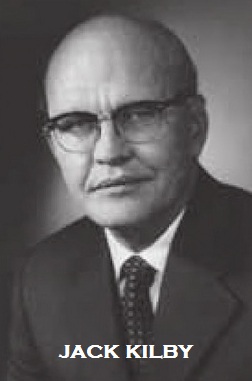
The first functional integrated circuit was demonstrated and patented by J. Kilby from Texas Instruments in 1959. It consisted of a sliced crystal germanium containing a bipolar transistor, a capacitor and three resistors. It demonstrated how several components could be integrated on the same semiconductor, but did not show any satisfactory method of connecting the components; this being achieved by hand using thin gold wires.

The invention of the integrated circuit was motivated by the time consuming, expensive, and at that time, notoriously unreliable hand-soldering process of connecting hundreds or thousands of discrete elements.

Integrated circuit is a miniaturized electronic comprised of a single transistor and other integrated components fabricated on semiconductor material.
The planar process initially developed by J. Hoerni and R. Noyce in 1959 as an improved method of manufacturing discrete silicon transistor, combined the existing diffusion and masking techniques with a method of connection.

Noyce’s circuit solved several practical problems that Kilby’s circuit had, mainly the problem of interconnecting all the components on the chip.

One of the first commercially available planar integrated circuits was a flip-flop containing four transistor and five resistors. It was one of a family of resistor transistor logic chips offer by Fairchild in 1961.

In 1964 the first linear integrated circuit was developed by R. Wildar, an operational amplifier which contained twelve transistor and five resistors. It was remarkable not only for being the first operational amplifier on a single chip, but also for the ingenuity of the design.

By the time the techniques of integrated circuit manufacture were maturing, and the pace of integration measured in terms of increased transistor count, greater manufacturing yield and reduced cost was marked.

Today, hundreds of millions of integrated circuits are sold annually and the integrated circuit semiconductor industries a major contributor to the world economy.
Brief history of integrated circuits

Sunday, December 25, 2016

The invention of Nestlé Nescafé

In 1901, Sartori Kato began introducing the American public to powdered coffee at the Pan-American Exposition in Buffalo, New York.

 In Guatemala in 1906, an Englishman named Washington observed the formation of coffee powder on the spout of a silver urn. After some experimentation, he began marketing instant coffee in 1909. In 1930, the Brazilian Coffee Institute contacted Nestlé to develop coffee, soluble in hot water and that retain its flavor.

Dr Max Morgenthaler
The country was stocking a large coffee surplus that ran the risk of going to waste. Coffee guru, Dr Max Morgenthaler, and his team set out immediately to find a way of producing a quality cup of coffee that could be made simply by adding water, yet would retain the coffee’s natural flavor.

Like many brand innovators, Nescafe was a result of intensive research – seven years of research to be precise taking place in Swiss Laboratories in the 1930s.

The new product was named Nescafé – a combination of Nestlé and café. Nestle introduced Nescafe, the first commercially successful soluble coffee, in Switzerland, on April 1st, 1938. The company applied the technology at its Hayes factory, west London.

This new purpose process permitted large –scale industrialized production and transformed the industry dramatically by avoiding crop waste.

With the international launches of Nestlé’s freeze-dried instant coffee brands, the company’s coffee marketing focus shifted, In 1964 Nestlé began marketing Nescafe Gold and Nescafe Filtre freeze-dried instant coffees in Europe and Taster’s Choice in Canada in 1966.
The invention of Nestlé Nescafé

Thursday, September 8, 2016

History of cheese

The origins of cheese making stretch back almost to the beginnings of agriculture. The earliest domestication of milk-producing animal probably took place about nine thousand years ago.

Milk becomes a fully reliable resource when it can be converted into a product that will keep; until that was possible farmers needed to rely extensively on slaughtering to maintain a supply of protein through the year.

It is generally believed that cheese was first made in the Middle East. Legend has it that a nomadic Arab accidentally made cheese when a saddlebag filled with milk fermented due to the hot sun and the galloping of his horse.

Early cheeses were not the solid products known today. They were simple curds and whey. The curd is the solid part while the whey is liquid.

Roquefort cheese
Early cheesemakers probably stumbled on coagulation caused by the combination action of acid and heat, which is the principle behind ricotta type cheeses.

The earliest direct evidence for cheese comes from Egypt. The strange substance found in two jars from a tomb of the Egyptian First Dynasty (1300 to 29000 BC), with inscription that were read as rwt of the north’ and ‘rwt of the south’ was eventually pronounced to be cheese. Workmen making cheese are depicted in Egyptian hieroglyphics. In ancient times, the whey was eaten immediately while the curd was salted or dried for preservation.

Attempts at heating partly soured milk, or whey that remained after cheese making, eventually would have produced the right combination of acidity and temperature to cause the coagulation of milk proteins, hence the discovery of acid/heat-coagulated cheeses, which to this day are widely produced in the Near East.

The Roman Legion helped spread the art of cheesemaking throughout Europe and England. The monasteries and feudal estates of Europe made great improvements in cheesemaking during the middle ages.

Many of the classic varieties of cheese enjoyed today were developed by monks. During the Renaissance, cheese dropped in popularity because it was considered unhealthy. By the nineteenth century, sentiment had changed and cheese production moved from farm to factory.

While most cheeses are mass produced today, some artisanal cheeses are still made by hand using old-fashioned techniques.
History of cheese

Tuesday, November 3, 2015

History of Microsoft Spreadsheet

The first spreadsheet on a personal computer was called VisiCalc (short for visible calculator) and was created by Daniel Bricklin and Bob Frankston in 1978.

Bricklin, student at Harvard Business School, had to perform some analytical tasks as part of his case study. He had two options to do it, either do it by hand or use an awkward mainframe program.  He envisioned “an electronic blackboard and electronic chalk in a classroom”.

He had managed to create the first working prototype model of his concept, which named VisiCalc. It is a program for Apple II computer. He recruited Frankston to help him write the code.

VisiCalc was a huge success. More than 700,000 copies of the program were sold. It was almost single handedly responsible for the success of the Apple II personal computer. By early 1980s, Lotus 1-2-3 was the leading spreadsheet. Lotus had bought and then discontinued VisiCalc. Borland’s Quattro Pro was another well-known product at that time.

In 1982, Microsoft developed its first electronic spreadsheet program called MultiPlan. In 1985, Microsoft Corporation came up with Excel for the Macintosh computer. This product was remarkable for its use pull down-menus and a point and click device called a mouse. Other spreadsheets use a command line interface that required knowledge of cryptic DOS command.

When Microsoft named its spreadsheet software “Excel,” it apparently did not now that Manufacturers Hanover Trust already had an automated banking program called Excel. As part of the settlement for trademark infringement, Microsoft agreed to refer always to its product as Microsoft Excel.

In the year 1993, with the release of version 5 Excel replaced Lotus 1-2-3 as the industry standard for spreadsheets.
History of Microsoft Spreadsheet

Sunday, October 19, 2014

Charles William Post and Post Cereal Company

In 1894, the first breakfast food made by the famous Dr. J. H. Kellogg of Battle Creek, Michigan. The Kellogg Company marketed Granose Flakes in 1895.

It was C. W. Post (October 26, 1854 – May 9, 1914), the founder of Post Cereals, who first clearly comprehended that convenience and flavor were more forceful and more widely appreciated advantages.

In 1891, Post was a patient in the Kellogg brother’s sanitarium in Battle Creek, and it was here that he was first introduced to breakfast cereal. Post tried to purchase a partnership in Kellogg organization, but his offer was refused.

Post incorporated the Postum Cereal Company in 1896 to manufacture and sell his grain-based coffee substitute. The coffee substitute so successful he was spending $1 million annually advertising it.

With a major success under way, Post experimenting with other products. In January 1898 he started marketing Grape Nuts, made from wheat and malted barley, which served to sweeten the cereal.

C. W Post died in 1914, his daughter, Marjorie Merriweather Post, inherited her father’s estate and continue to build the company.

In 1929, the company was acquired by the General Foods Company owned by Clarence Birdseye.
Charles William Post and Post Cereal Company

Monday, October 6, 2014

The invention of paint and brush by an Egyptians

The earliest paintings known, prehistoric cave paintings were painted without any binding medium.

The Egyptians probably invented the paint brush. They were also the first to manufacture what to be called paint, some 8,000 years ago.

Their paints could protect as well as decorate. Beeswax, vegetable oils and gum arabic were heated and mixed with earth and plant dyes to paint images that have lasted thousands of years.

The Egyptians used asphalt and pitch to preserve their paintings.

Egyptians employed the tempera technique, mixing colures with water and adhesives. Two types of brush were used in painting, both of which have been found in tombs as part of the painter’s equipment.

*Coarse brush were made with plant fibers and usually alfalfa and split palm leaves
*The finer brushes were made with fibrous stems, usually the central ribs of palm leaves or reeds.

Bundle of brushes wrapped round with string stained with red paint, found in the tomb of Montuherkhopeshef at Thebes. The thick brushed made from fibrous wood.
The invention of paint and brush by an Egyptians

Friday, August 1, 2014

Cereal flake breakfast

In 1894, flaked breakfast cereal was accidently invented by Seventh Day Adventist Dr. John Harvey Kellogg.

He and his younger brother Will Kellogg found a new way of processing corn: they steamed and soften the kernels, added flavorings and then flattened it by feeding it through two steel rollers. The resulting flakes were then baked in an oven.

It dried into flakes, which were fortunately a big hit among the Sanitarium’s clientele. Dr. Kellogg named their first successful wheat flakes product Granose Flakes.

Two years later they had a patent for the technique and began selling Sanitas Toasted Corn Flakes in 1898.

Will Kellogg developed the product into a great commercial success, in part by adding sugar to the malt and corn combination from which he made the flakes.

In 1895 Charles W. Post introduced Postum Cereal Coffee. In 1898 Grape Nuts was put on the market, Post, using a similar process of flaking as the Kellogg brothers in 1906 introduced his flaked corn.

Another important person in the history of the breakfast cereal industry is C.C Washburn, who began a flour mill in Minneapolis, Minnesota.

He formed the General Mills Company. He introduced a wheat flake that became Wheaties in the 1920s, and is still popular today.
Cereal flake breakfast 

Tuesday, February 4, 2014

Dr Pepper soft drink in history

Young pharmacist from Waco, Texas, Charles Alderton supplemented his pharmaceutical duties at Morrison’s Old Corner Drug Store by serving its soda fountain customers.

Fascinated by the various carbonated beverages he developed a successfully new combination of flavors that patrons called ’a Waco’ in 1885.

He mixed the concoction of flavors as a beverage for his customers. Dr Pepper was served first time on December 1 1885.

The name of Dr Pepper came from the pharmacy’s owner, Wade Morrison, who was pining away for a lost love in Virginia, the daughter of one Dr. Charles Pepper.

Morrison hoped to impress the girl’s father by naming Alderton’s concoction for him.

In 1891, Morrison and Lazenby formed the Artesian Manufacturing & Bottling Company, which later became the Dr Pepper Company. Dr Pepper was introduced to United States at the 1904 Louisiana Purchase Exposition as a new cola.

The Dr Pepper Company was incorporated in 1923 in Dallas. After moving to Dallas, Dr Pepper enjoyed fairly constant success among thirsty Southerners.

In the 1980's they merged with Seven Up, Inc. Corporate headquarters for Dr Pepper/Seven Up Inc. remains in Plano, north of Dallas.

The Dr Pepper Company is the oldest major manufacturer of soft drink concentrates and syrups in the United States.
Dr Pepper soft drink in history

Saturday, February 1, 2014

Jacquard Loom by Joseph Marie Jacquard

After French revolution woven silk, especially silk with elaborate brocades or design, was in demand both in France and abroad. Weaving designs into silk was an extremely time consuming process.

A skilled weaver and drawboy using the best equipment available could produce only about an inch (2.54 cm) of designed silk cloth a day.

The Jacquard Loom, developed in 1801 invented by Joseph Marie Jacquard, is often quoted as a source of prior art. It is a mechanical loom, which used the holes punched in pasteboard punch cards to control the weaving of patterns on fabric.

The loom enabled even amateur weavers to weave complex designs. Each punch card corresponds to one row of the design and the cars were strung together in order.

Punching holes in a card was a much faster and more reliable process than tying up the leashes to the warp threads.

He patented this improved loon that could create silk fabric decorated with small, simple patterns without the help of a drawboy.

In 1804 Jacquard unveiled the loom that now bears his name. The Jacquard Loom incorporated ideas from other, experimental looms, but in a way that created a uniquely practical machine.

The device was an immediate success and by 1812 there were 11,000 Jacquard Looms in use in France. 

Herman Hollerith refined the machine and invented the Hollerith punched card, the card reader, and the key punch machine.

In 1830s, a British scientist, Charles Babbage attempted to build something he called Analytical Engine a precursor to the modern computer by using the idea of Jacquard Looms.

Modern Jacquard Looms are still in use were soon applied to other machines, including early information-storage systems.
Jacquard Loom by Joseph Marie Jacquard

Wednesday, January 1, 2014

The invention of Pepsi Cola by Caleb Bradham

Summer 1898, the weather was hot and humid. In New Bern, North Carolina pharmacist named Caleb Bradham began experimenting with various combinations, of spices, syrups and juices in search of a refreshing soft drinks to serve parched customers.

Caleb poured a sample of his mixture into a beaker and gave it to his assistant to taste it. When he saw his assistant’s face light up upon tasting it, Caleb knew he had created a winner.

His creation became so popular his customers named it "Brad's Drink." Caleb decided to rename it "Pepsi-Cola," after its two main ingredients pepsin and the cola nut and advertised his new soft drink.

People responded, and sales of Pepsi-Cola started to grow, convincing him that he should form a company to market the new beverage.

Caleb Bradham originally bought the name ‘Pep Cola’ from a bankrupt Newark, NJ, competitor for $100 and renamed the soft drink Pepsi Cola. In 1902, he founded the Pepsi-Cola Company in the back room of his New Bern pharmacy.

At first, he mixed the syrup himself and sold it exclusively through soda fountains. The business began to grow, and on June 16, 1903, "Pepsi-Cola" was officially registered with the U.S. Patent Office. That year, Caleb sold 7,968 gallons of syrup, using the theme line "Exhilarating, Invigorating, Aids Digestion." An artist and neighbor of Caleb designed the first Pepsi advertisement, and he was able to move his business into larger warehouse.

By 1905, demand for Pepsi-Cola had increased so much the Caleb Bradham decided it was time to offer Pepsi-Cola for sale in bottles. To facilitate the sale of Pepsi-Cola in bottles, Bradham issued the first of many franchise agreements.

In just six years, Pepsi was franchised in 24 states.
The invention of Pepsi Cola by Caleb Bradham

The Most Popular Posts