Showing posts with label cocoa. Show all posts

Sunday, September 10, 2017

History of cocoa drinks during ancient times

During ancient times, as early as 1000 BC, people enjoyed chocolate in a drink.

Cocoa trees were believed to have been around since between 400 B and 1500 BC in the Amazon basin, Central America. It was cultivated by the Maya, Toltec and Aztec of what is now Mexico.

In AD 250 to AD 900, Mayan society especially elite group already consumed an unsweetened cocoa drink which was made from ground beans. Mayan really loves the drinks.

The drink so called chocolatl, a drink made by roasting and grinding cocoa nibs, mashing with water , often adding other ingredients such as vanilla, spices or honey.

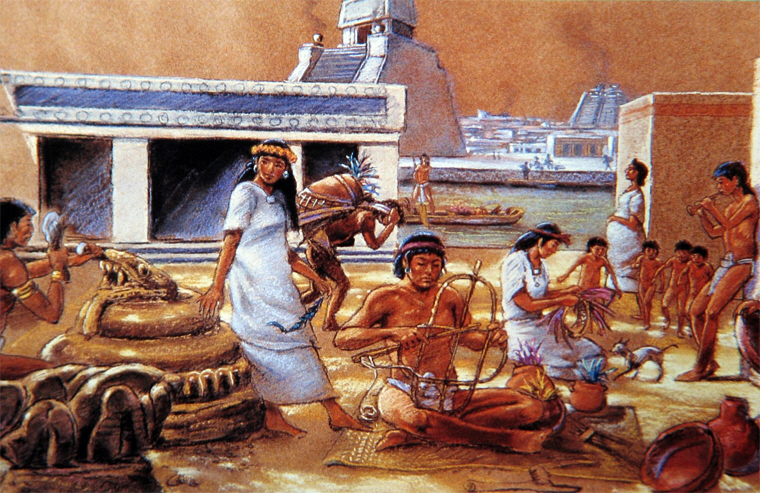
Aztec society
The drinks later become popular among Aztec in 14th century. They spiced the drinks and enjoyed for its energy and sexual enhancing powers. Aztec also used coca as a currency.

Although this drink was a favorite among Mayan royals and priest, commoners enjoyed the drink on some occasions as well.
History of cocoa drinks during ancient times

Saturday, June 13, 2015

History of Dutching process of cocoa powder

There are two basic types of cocoa powder, natural and Dutch process. Dutch process cocoa is traditionally thought of as European-style. Before 1800s, people enjoyed hot chocolate with pools of grease floating on top. At that time chocolate drinks had a gritty texture and a greasy appearance. The cocoa butter or fat of the cacao beans, left on oily substance on the surface.

Then along came the Dutch chemist, who figured out how to press out the cocoa butter from the coca beans. He attempts to reduce the harsh acidity of cocoa. Coenraad van Houten had been experimenting in his factory to find a better way to make chocolate rather than boiling and skimming off the cocoa butter.

In 1828, Van Houten patented a press that removed two thirds of the cocoa butter from chocolate liquor, or paste ground of roasted beans. He used a technique of using a large hydraulic press to separate the coca butter from the chocolate liquor.

This new process reduced the fat content of cacao to 27% from 50-55% and primed it to become ground into powder.

He eventually treated that the acid taste of the cocoa nibs could be neutralized by adding an alkali –carbonate of potash – prior to the roasting process. This changes the color dramatically, as well as the flavor, produces a slight physical swelling of the cocoa particles, and neutralizes free acids.

This type of cocoa called: Dutch processed cocoa powder. This make chocolate darker and milder which results in more pronounced chocolate flavor.

Due to this, chocolate drinks become a lot smoother and easier to digest. Dutch cocoa powder is also known as alkalized cocoa powder.

This processing of chocolate became known as “Dutching.”
History of Dutching process of cocoa powder

Thursday, September 11, 2014

Cocoa drinks in Europe

The first European to discover cocoa was Columbus although the Spaniard Hernand Cortes was the first person to bring the cocoa seed back to Spain in 1519, within the reign of King Phillip III.

Drinking chocolate was initially very much the drink of the Catholic aristocracy and became associated in the minds of the Protestants North with the idle rich.

It was not until 1657 however, that cocoa was introduced to England. It became a trend in London in the 1700s; English will added milk to the chocolate and served after dinner.

In the eighteenth century chocolate started to become available to more classes of society with the establishment of chocolate houses in London.

The eighteenth century also saw the English mixing brick dust with their chocolate to thicken it, a habit that was stopped in 1727 when Nicholas Sanders mixed chocolate with milk creating the first hot chocolate.

In 1828, Dutch chemist, Coenraad Johannes Van Houten, invented the way forward by extracting the butterfat (cocoa butter) from the bean therefore making the drink smooth and tastier.

In 1926 Hershey capitalized in the soda fountain and ice cream parlor boom by marketing cocoa syrup, renamed chocolate syrup in time to compete with Bosco Chocolate Syrup for hearts and wallets of the baby boomers of the post-World War II generation.
Cocoa drinks in Europe

Friday, December 30, 2011

Early History of Cocoa

The Olmecs occupied a small area south of Veracruz and were the first cultivators of the cacao pod. The Mayans were next, just south of present day Mexico, to elevate chocolate to status of the Gods. They named the cacao tree Cacahuaquchtl (tree) as they were concerned no other tree was worth naming.

Maya did not sweeten the cacao drink but added spices and crushed chile peppers to make a variety of drinks they prized for their foam.

Cacao played an important role in the economic , ritual and political life of the pre-Hispanic Maya.

They believed the tree belonged to the gods and that the pods growing from the tree were an offering from the gods to man. They Mayans were the originators of a bitter brew made from cacao beans. It was a luxury drink enjoyed by kings and noblemen.

The Maya believed that cacao could cure a variety of ills, including hemorrhoids and nervous tension.

The word cacao beans apparently derived from two Mayan words, ‘kaj’ and ‘kab’ which means ‘bitter’ and ‘juice’ respectively.

Their combination, ‘kajkab’ became ‘kahkah’ in Spanish.

Christopher Columbus, in 1502, reached the island of Guanaja off the coast of Honduras. As legend goes he was greeted by natives that gave him a sackful of cacao beans in exchange for some of his own merchandise.

When Cortes arrived seventeen years later the cacao beans were being used as food and served as a unit of currency and they were an important item of tribute. It was reported that a slave could be bought for one hundred cacao beans. At the time, two hundred small cacao beans were worth one Spanish real.

Cacao in Maya area can be traced back to somewhere between 600 and 400 BC, based on chemical remains from sprouted vessels from Belize.

The Mayan’s ‘cacahuatl’ was a cold beverage prepared without either sugar or milk, but the Spaniards preferred it hot and sweet and mixed with milk.

The Spanish helped develop cacao plantations in Mexico, Ecuador, Venezuela, Peru, Jamaica and Hispaniola (Haiti and the Dominican Republic). Cacao production has since spread all over the world but the cacao from these original regions still produce the most highly prized variety of cacao bean.
Early History of Cocoa
The Most Popular Posts